

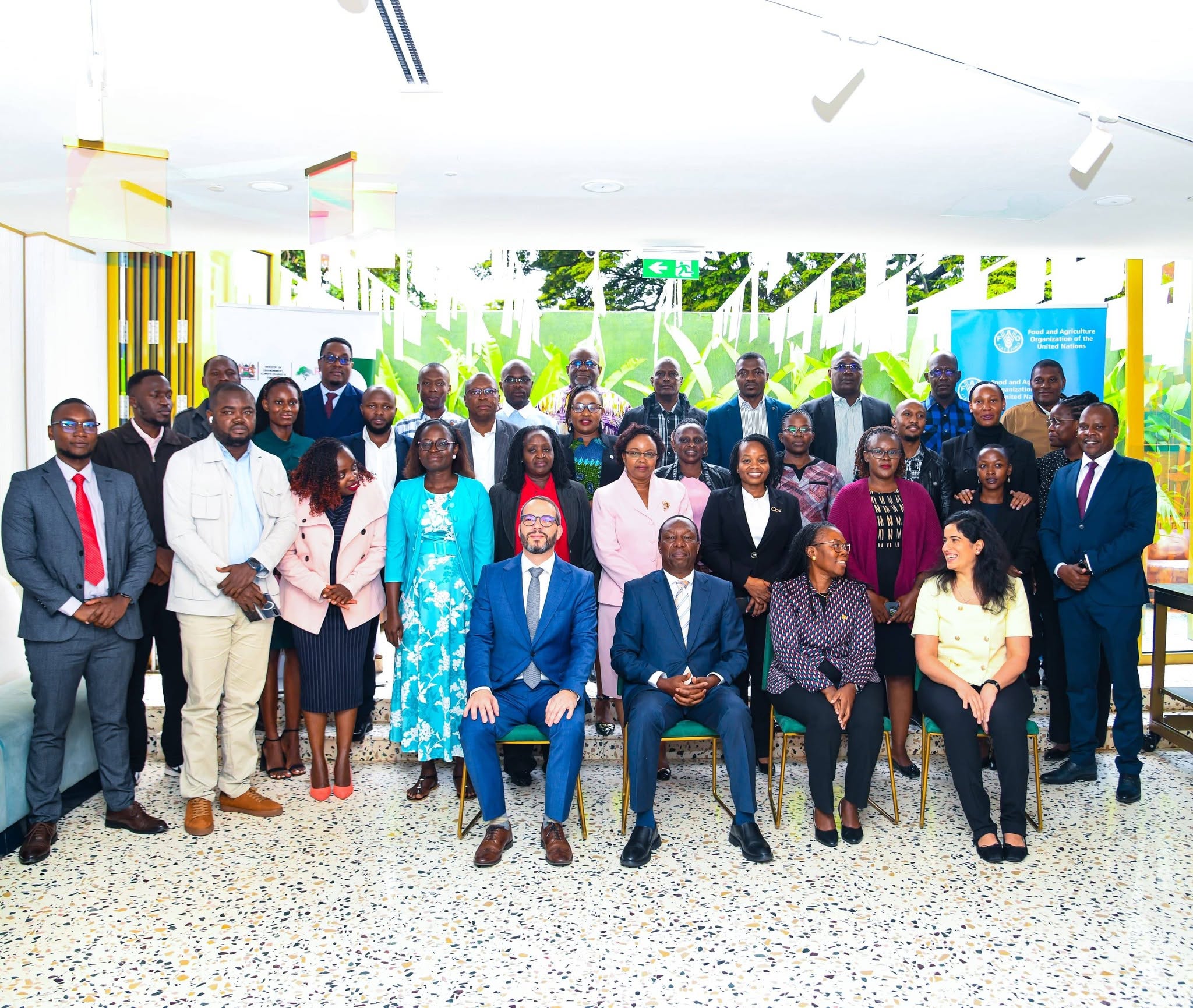
Kenya Hosts Côte d’Ivoire for South–South Knowledge Exchange on Innovative Forest Monitoring
Nairobi, 23 February 2026 – Kenya reinforced its position as a regional leader in sustainable forest management and climate action by hosting a high-level delegation from Côte d’Ivoire for a South–South Knowledge Exchange on innovative forest monitoring in Sub-Saharan Africa.
The forum, officially opened by Forestry Principal Secretary Mr. Gitonga Mugambi, brought together government officials, technical experts and development partners to strengthen collaboration on innovative approaches to forest monitoring, restoration and climate resilience. The engagement reflects growing cooperation among African countries in addressing common environmental challenges, including deforestation, forest degradation, agricultural expansion, land use pressure, increasing demand for fuelwood and the effects of climate change.
During the opening session, the Principal Secretary emphasized the importance of African countries developing and adopting innovative, science-driven forest monitoring systems that respond to the continent's unique environmental and socio-economic realities. He noted that stronger regional collaboration, knowledge sharing and technology transfer are critical to accelerating sustainable forest management and landscape restoration across Africa.
Mr. Mugambi highlighted Kenya's ambitious forest restoration agenda, anchored on the national target of increasing tree cover to at least 30 percent by 2032 through the Presidential 15 Billion Tree Growing Programme. He noted that the programme adopts a comprehensive approach that integrates agroforestry, restoration of degraded landscapes, watershed protection, farm forestry and private sector participation while placing strong emphasis on accountability through modern monitoring systems.
The Principal Secretary showcased Kenya's transition from conventional reporting methods to digital, real-time and spatially explicit monitoring frameworks that improve transparency, accountability and evidence-based decision-making. Among the innovations presented was the Jaza Miti application, which captures GPS coordinates of planted trees, records tree species and planting dates, monitors survival rates and integrates restoration data into the national reporting platform under the 15 Billion Tree Growing Programme.
Kenya's use of drone technology alongside satellite-based monitoring systems was also highlighted as a key advancement in strengthening oversight of restoration sites. The integration of high-resolution imagery, forest disturbance alert systems and partnerships with the Food and Agriculture Organization (FAO) and the Department of Resource Surveys and Remote Sensing (DRSRS) has enhanced near-real-time forest change detection and improved the accuracy of forest monitoring and data validation.
The Principal Secretary further noted that Kenya's National Forest Monitoring System is aligned with REDD+ reporting requirements, Forest Reference Emission Levels, greenhouse gas inventories and the country's Nationally Determined Contributions (NDCs) under the Paris Agreement, reinforcing Kenya's commitment to international climate action and sustainable development.
The knowledge exchange provided an important platform for participants to share experiences, explore the harmonization of digital monitoring tools, strengthen institutional capacities and enhance Monitoring, Reporting and Verification (MRV) systems to support forest conservation efforts across the region.
The event was attended by Forest Development Secretary Mr. George Tarus, Kenya Forestry Research Institute (KEFRI) Chief Executive Officer Dr. Jane Njuguna, Coordinator of the 15 Billion Tree Growing Programme Ms. Susan Boit, delegates from Côte d’Ivoire and representatives from the Food and Agriculture Organization (FAO).