

Elements
KENYA NATIONAL REDD+ STRATEGY
The Kenya National REDD+ Strategy, finalized in December 2021, provides the national framework for implementing REDD+ and achieving sustainable forest management while contributing to climate change mitigation and national development goals. The Strategy was developed through a comprehensive and participatory process involving government institutions, Indigenous Peoples and Local Communities (IPLCs), civil society, academia, the private sector, and development partners.
Read More ▼
It was informed by extensive analytical studies that identified the direct and underlying drivers of deforestation and forest degradation across the country's forest ecosystems, including agricultural expansion, unsustainable wood extraction, charcoal production, infrastructure development, forest fires, livestock grazing, weak governance, policy gaps, and socio-economic pressures.
Based on these findings, the Strategy outlines policy measures, strategic actions, and interventions aimed at addressing these drivers, promoting sustainable forest management, enhancing forest carbon stocks, and improving community livelihoods.
The Strategy also establishes the institutional and governance framework for REDD+ implementation, defining the roles and responsibilities of national and county governments, implementing agencies, technical working groups, communities, and other stakeholders.
As Kenya's overarching REDD+ policy framework, the Strategy provides the roadmap for coordinated implementation, monitoring, financing, stakeholder engagement, and reporting of REDD+ activities, ensuring alignment with national priorities and international commitments under the UNFCCC.
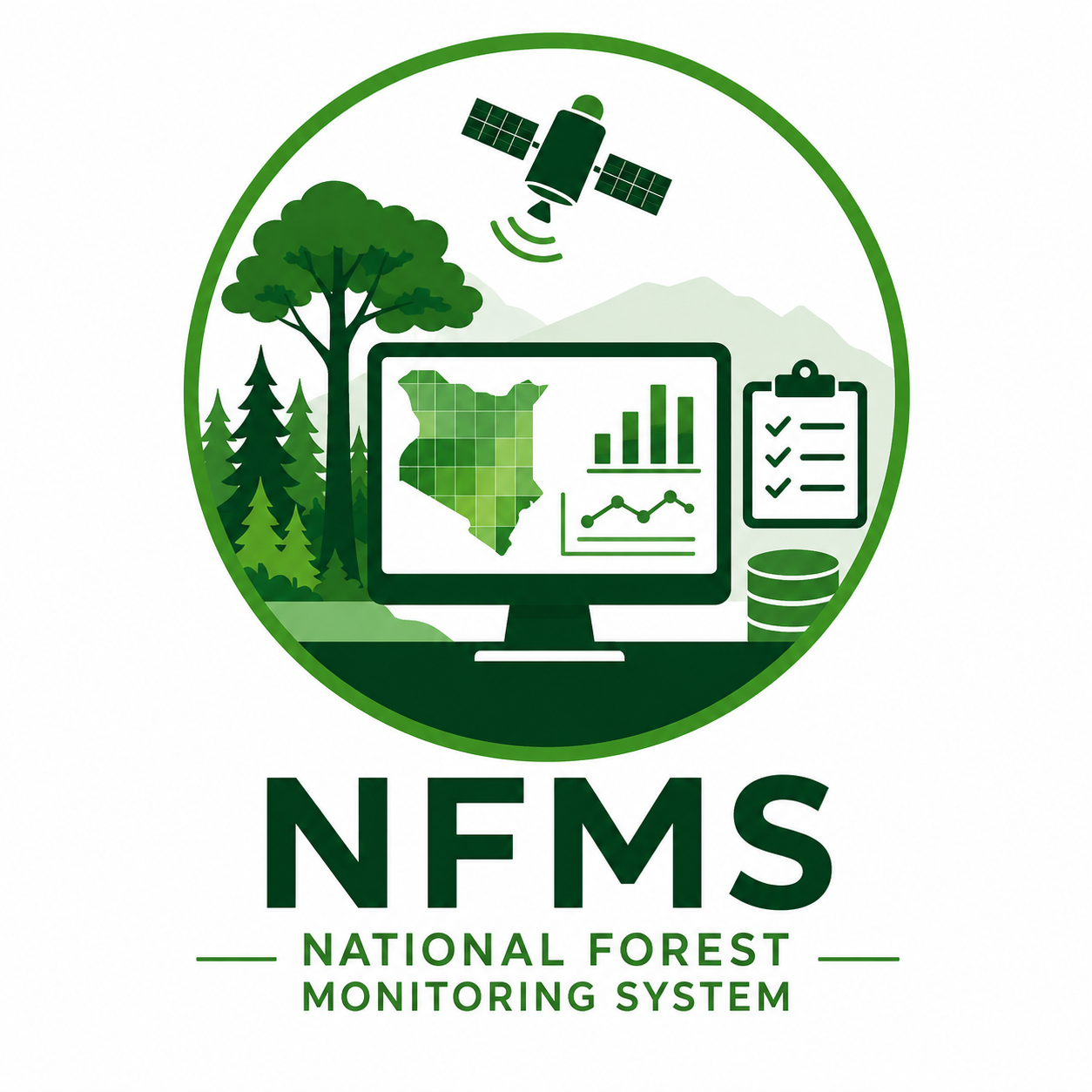
NATIONAL FOREST MONITORING SYSTEM (NFMS)
The National Forest Monitoring System (NFMS) is Kenya's national framework for monitoring, measuring, reporting, and verifying (MRV) forest resources and forest-related greenhouse gas emissions and removals in support of REDD+ implementation. Housed within the Kenya Forest Service (KFS), the NFMS provides the technical infrastructure for generating reliable, transparent, and consistent forest information to support national decision-making, sustainable forest management, and international reporting under the UNFCCC and the Paris Agreement.
Read More ▼
The system comprises four integrated components: the Satellite Land Monitoring System (SLMS), which uses remote sensing to monitor changes in forest cover and land use over time; the National Forest Inventory (NFI), which collects field-based data to estimate forest carbon stocks, biomass, and other forest attributes; the Forest Information Platform (FIP), which serves as the central repository for storing, managing, and disseminating forest-related data and information; and the Data Management Function, which facilitates data integration, quality assurance, analysis, reporting, and information sharing. Together, these components provide the robust scientific and technical foundation required to monitor REDD+ activities, estimate emissions and removals, assess progress towards national forest and climate objectives, and support results-based payments.
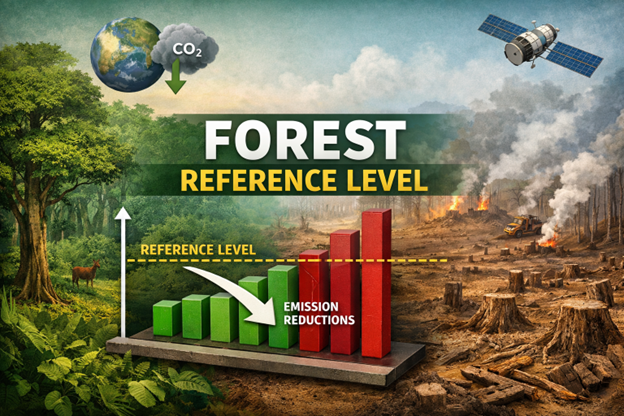
KENYA FOREST REFERENCE LEVEL (FRL)
Kenya's Forest Reference Level (FRL) provides the national benchmark against which the country's performance in reducing emissions from deforestation and forest degradation is measured under the REDD+ framework. Submitted to the UNFCCC in 2020, the FRL establishes a historical baseline using a reference period of 2002–2018, with forest change monitored at four-year intervals.
Read More ▼
It covers four REDD+ activities: reducing emissions from deforestation, reducing emissions from forest degradation, sustainable management of forests, and enhancement of forest carbon stocks.
Based on historical emissions and removals, Kenya's proposed FRL is 52,204,059 metric tonnes of carbon dioxide (tCO₂) per year, providing the benchmark against which future REDD+ performance is assessed.
The FRL serves as the basis for measuring emissions reductions, accessing results-based payments, and fulfilling Kenya's reporting obligations under the UNFCCC and the Paris Agreement.
SAFEGUARDS INFORMATION SYSTEM (SIS)
↓ Download SISKenya's Safeguards Information System (SIS) is a national framework designed to provide information on how social, environmental, and governance safeguards are addressed and respected throughout the implementation of REDD+ activities. Developed in accordance with the Cancun Safeguards under the UNFCCC, the SIS promotes transparency, accountability, and inclusive stakeholder participation while ensuring that REDD+ interventions contribute to biodiversity conservation, protect the rights and traditional knowledge of Indigenous Peoples and Local Communities (IPLCs), strengthen good forest governance, and avoid adverse social and environmental impacts.
Read More ▼
As part of the safeguards framework, Kenya has also established a Feedback and Grievance Redress Mechanism (FGRM) to provide stakeholders with a transparent and accessible mechanism for lodging and resolving grievances that may arise during REDD+ implementation. This mechanism helps ensure that concerns are addressed fairly and efficiently, thereby strengthening accountability and confidence in the REDD+ programme.